
Iran has officially activated Article 111 of its Constitution, marking one of the most significant political developments in the country in decades. For the first time in 36 years, a new figure has stepped into the highest level of power.
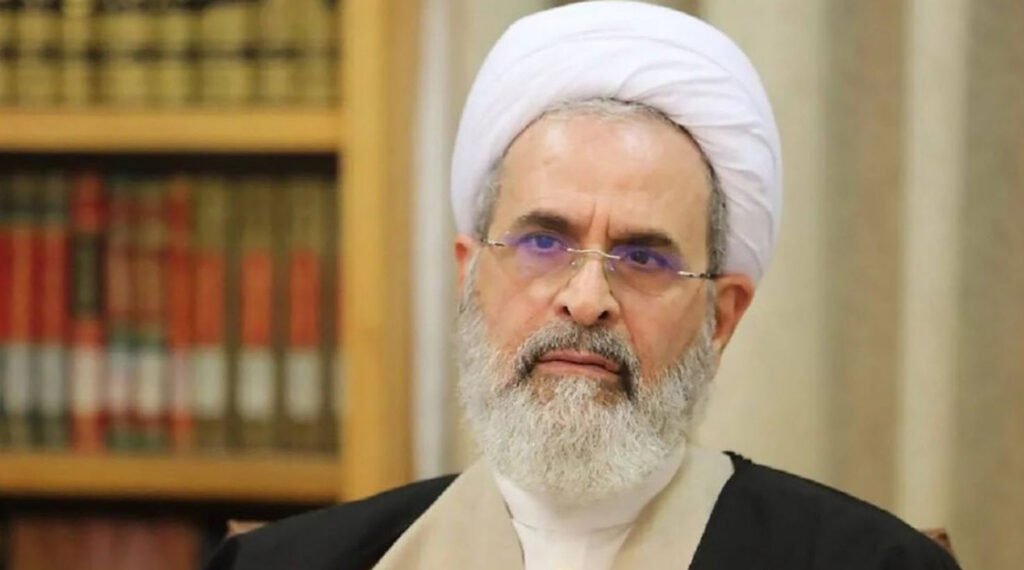
The name now dominating headlines: Ayatollah Alireza Arafi.
Most people outside Iran have never heard of him. But inside the Islamic Republic’s power structure, Arafi has been quietly building influence for decades.
This political shift follows constitutional procedure and introduces a temporary leadership structure while Iran awaits the selection of a permanent Supreme Leader.
What Is Article 111 of Iran’s Constitution?
Under Article 111, when the Supreme Leader is unable to fulfill his duties, a temporary leadership council takes over until the Assembly of Experts appoints a new Supreme Leader.
This time, Iran formed a three-person leadership council:
- Ayatollah Alireza Arafi
- Masoud Pezeshkian
- Gholam-Hossein Mohseni-Eje’i
Together, they are temporarily splitting the powers previously held by Ali Khamenei, who has led Iran since 1989.
However, among the three, Arafi is the figure drawing the most attention from political analysts and international observers.
Ayatollah Alireza Arafi – The Man Now Running Iran
Born in 1959 in Meybod, a small town in central Iran, Arafi grew up in a religious household. His father reportedly had close ties to Ruhollah Khomeini, the founder of the Islamic Republic.
At just 11 years old, Arafi was sent to Qom – Iran’s most important religious center to begin seminary education. This early entry into the clerical establishment positioned him within the core of Iran’s ideological system.
Arafi’s rise was not accidental.
By the age of 33, he was personally appointed Friday prayer leader by Ali Khamenei – a role that signals deep institutional trust.
Over time, he simultaneously held three highly influential positions:
- Director of Iran’s entire seminary system
- Member of the Guardian Council (which vets legislation and electoral candidates)
- Member of the Assembly of Experts (which selects the Supreme Leader)
This is politically significant: the man now temporarily exercising Supreme Leader powers was already part of the body that chooses the Supreme Leader.
Few figures in Iran combine this level of clerical authority and institutional oversight.
Unlike many senior clerics, Arafi speaks fluent English and Arabic.
In 2022, he met Pope Francis at the Vatican – a rare diplomatic engagement for a senior Iranian religious figure.
He has also publicly promoted the use of artificial intelligence in Islamic outreach, signaling a willingness to modernize the regime’s global communication strategy.
International media outlets have described him as a “trusted loyalist” of the Islamic Republic’s establishment. Iran’s powerful security apparatus, including the Islamic Revolutionary Guard Corps (IRGC), reportedly sees him as a stable and reliable figure.
Why This Political Transition Matters
This development is more than symbolic.
The Supreme Leader in Iran holds sweeping powers, including:
- Command over the armed forces
- Appointment of key judicial and military officials
- Final say on foreign and nuclear policy
- Oversight of intelligence and security bodies
Even as part of a three-member council, Arafi’s influence places him at the center of decision-making during a critical period.
Many analysts had already listed him as a possible successor to Khamenei. Now, by operating under Article 111, he is effectively filling that role at least temporarily.
The next step lies with the Assembly of Experts.
They must decide:
- Will Ayatollah Alireza Arafi become the permanent Supreme Leader?
- Will another senior cleric emerge as a compromise candidate?
- Or will Iran restructure its leadership model permanently?
The answer could reshape Iran’s domestic politics, nuclear negotiations, regional alliances, and relations with the West.
Final Analysis
Iran activating Article 111 signals a historic moment in the Islamic Republic’s political evolution.
Ayatollah Alireza Arafi is no outsider. He is a product of the system, deeply embedded within its clerical, legal, and political institutions. His decades-long rise suggests preparation, not coincidence.
Whether this temporary arrangement becomes permanent will depend on power dynamics inside Iran’s elite circles especially within the Assembly of Experts.
For now, one thing is clear:
After 36 years of centralized leadership under Ali Khamenei, Iran is entering a new chapter — and Ayatollah Alireza Arafi stands at its center.